Coffee beans aren’t just a morning pick-me-up. They’re the backbone of one of the world’s most traded commodities. From plantations in Karnataka and Coorg to café counters in Milan and New York, beans power economies, fuel conversations, and shape global culture. But here’s the catch: trading coffee successfully isn’t just about buying and selling. It’s about knowing the market, building strong supply chains, and staying compliant in a business that shifts fast. This guide breaks it down. Whether you’re a buyer, trader, roaster, or café owner—you’ll find everything you need to know to win in the coffee trade.
What Import–Export Companies Need to Know
Jumping into the coffee trade blind? Costly mistake.
Here’s your starting playbook:
| ● | Know your beans: Arabica, Robusta, specialty varieties—buyers care about taste and profile. |
|---|---|
| ● | Track global shifts: ICO reports reveal where demand is moving. |
| ● | Understand pricing and logistics: Tariffs, freight, contracts—get them right before you commit. |
| ● | Relationships matter: Roasters, wholesalers, distributors—long-term partnerships mean stability. |
| ● | Stay compliant: DGFT rules and export documentation are non-negotiable. |
Trading coffee means knowing the market inside-out. Smart exporters don’t just watch prices—they do market research to know the demand, buyer behavior, and tariff risks which give you that edge by highlighting country-specific trends and buyer insights before you ship.
Who Buys Coffee Beans in Bulk?
The short answer: a lot of people. Wholesalers, international traders, café chains, boutique roasters—all are hunting for reliable supply. From Chikmagalur and Kerala to the U.S., Europe, and the Middle East, Indian beans are shipped in bulk every season. From Chikmagalur to Kerala, Indian beans reach U.S., European, and Middle Eastern buyers every season. If you’re looking to diversify, our analysis of Top Indian Export Markets Outside the US shows how regions beyond America are becoming prime growth hubs for coffee exporters.
Coffee Bean Suppliers in India
India has a strong network of suppliers under the Coffee Board of India. They sell Arabica and Robusta in wholesale lots, with a reputation for consistency, certification, and compliance.
On the manufacturing side, names like Tata Coffee, Blue Tokai, and Coorg Roasters go a step further. They don’t just sell beans—they add value with roasting, packaging, and export-ready products that meet ISO and Fair Trade standards.
Who’s Buying Globally?
| ● | Germany, Italy, Japan, U.S. → Heavy importers of Arabica and Robusta. |
|---|---|
| ● | Indian Robusta → A favorite for espresso blends. |
| ● | High-altitude Arabica → Fuels specialty and premium markets. |
Add to that the café giants - Starbucks, Barista, Third Wave Coffee - who need consistent bulk supply.
At the same time, micro-roasters in Bengaluru, Mumbai, and Delhi chase smaller lots of single-origin beans, curating unique blends for urban coffee lovers.
And B2B traders registered with DGFT? They act as the middle-link, reselling beans to the UAE, South Korea, and Singapore.
Why the Demand Keeps Rising
Here’s the big picture:
| ● | Café culture is booming—India and globally. |
|---|---|
| ● | Millennials want premium and specialty coffee. |
| ● | Café chains need reliable, high-quality supply. |
| ● | Importers and resellers profit from bulk deals. |
Coffee demand isn’t slowing down anytime soon.
Consumers Want Experiences, Not Just Coffee
Urban drinkers aren’t chasing caffeine alone. They want story, origin, and quality. That’s why cafés like Blue Tokai, Starbucks India, and Third Wave Coffee market transparency, sourcing tales, and tasting notes. It’s why specialty beans—organic Robusta, single-origin Arabica—are seeing a surge in demand.
Growth Channels Driving Coffee Trade
| ● | Global café chains → Starbucks, Costa Coffee, Tim Hortons. |
|---|---|
| ● | Indian players → Café Coffee Day, new startup roasters. |
| ● | E-commerce → Amazon, Flipkart, niche coffee platforms now selling fresh beans and brewing kits. |
This dual growth—bulk wholesale + online retail—is reshaping the market.
Roasters, Experiments, and Profit Margins
Independent roasters are experimenting with Arabica, Robusta, even Liberica and Excelsa, creating blends that stand out.
Meanwhile, export houses registered with DGFT and international buyers in Germany, Italy, Japan, and the Middle East are scaling up.
Margins come from:
- Currency swings
- Organic premiums
- Rising Asia-Pacific consumption
In other words: opportunity is wide open.
India’s Strength in Coffee Production
India remains a trusted origin for premium beans.
| ● | Robusta from Karnataka |
|---|---|
| ● | Arabica from Chikmagalur & Coorg |
| ● | Support from the Coffee Board of India |
Key destinations? Italy, Russia, the Middle East.
Indian exporters are carving a bigger role in the global coffee map.
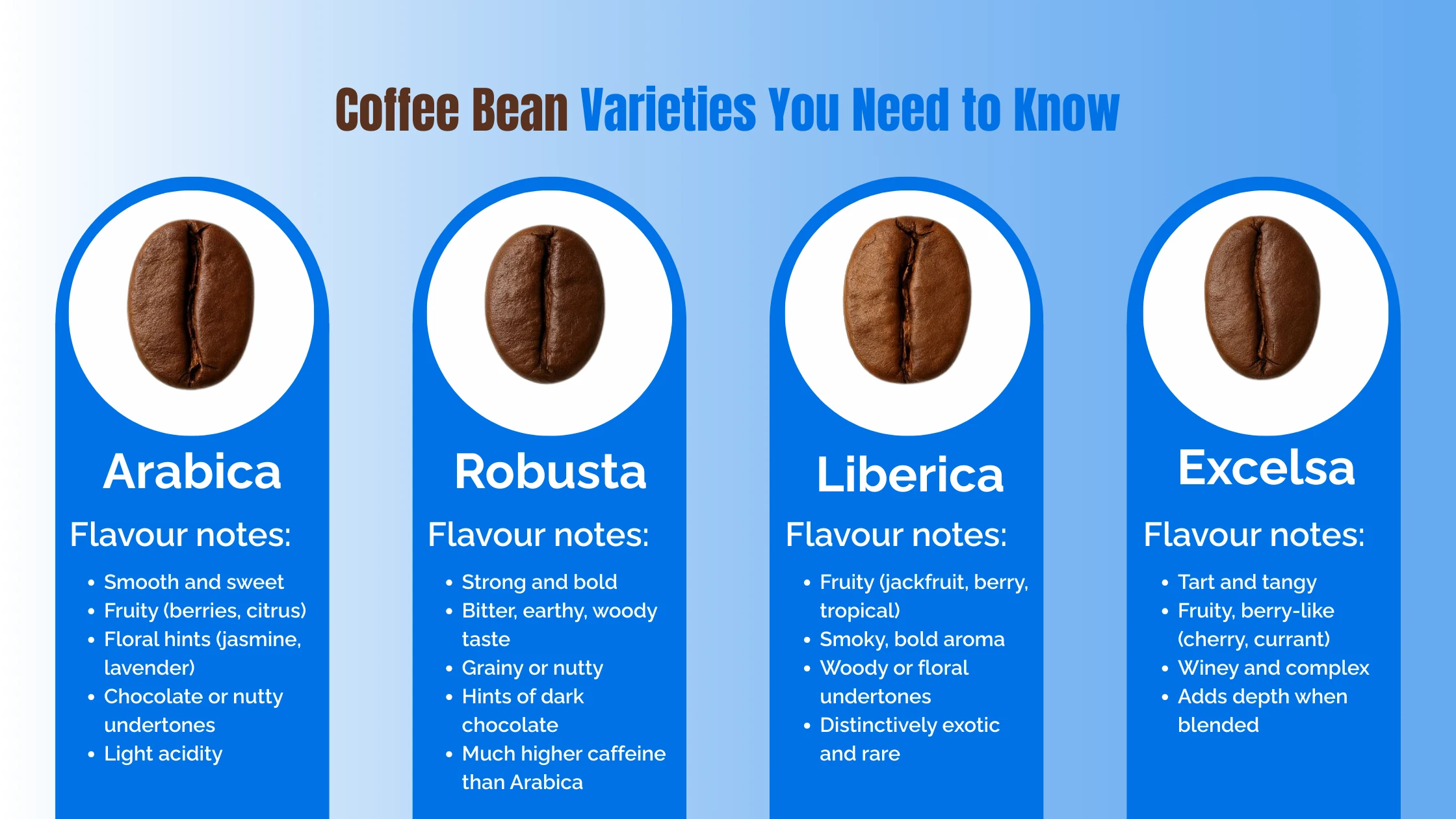
The Coffee Bean Varieties You Need to Know
| ● | Arabica →Smooth, floral, premium. Specialty favorite. |
|---|---|
| ● | Robusta →Stronger, bitter, high caffeine. Perfect for espresso and instant coffee. |
| ● | Liberica →Rare, fruity, woody. Niche but valued. |
| ● | Excelsa →Tart, fruity, experimental. Rising with adventurous roasters. |
Global Market Trends in 2025
The coffee industry (worth $130B+) is transforming.
| ● | Organic demand →U.S., Germany, Japan lead the shift. Certifications (USDA Organic, Rainforest Alliance) build trust and justify higher prices. |
|---|---|
| ● | Specialty Arabica →High-altitude beans from Ethiopia, Colombia, and India’s Western Ghats are booming. |
| ● | E-commerce coffee sales →Amazon, Alibaba, and niche shops enable direct-to-consumer cross-border sales. |
| ● | Price volatility →Climate swings in Brazil, shipping costs, and currency fluctuations keep the market unstable. |
Sourcing High-Quality Beans
If you want premium beans, you need premium processes:
| ● | Partner with verified suppliers registered under the Coffee Board of India. |
|---|---|
| ● | Look for certifications—Fair Trade, USDA Organic, Rainforest Alliance. |
| ● | Compare bean profiles (Arabica vs Robusta vs Liberica) to match markets. |
| ● | Check cupping scores and SCA grades. |
| ● | Work with sourcing companies who handle compliance and logistics. |
Coffee Bean Grades
Grading isn’t optional—it sets market value.
| ● | Specialty grade →SCA score above 80. The world's top roasters love it. |
|---|---|
| ● | Premium grade →Solid quality at good pricing. Perfect for cafés. |
| ● | Exchange grade →Standard beans used for instant coffee. |
| ● | Below standard →Mass blends, lower quality. |
In India and Africa, beans are also graded by size (AA, AAA, PB). Bigger isn’t always better, but it matters for buyers
How Much Do Coffee Beans Cost?
Prices shift daily. But here’s the latest snapshot:
Global prices (Sept 2025):
| ● | Arabica → ~$8.78/kg (₹773/kg) |
|---|---|
| ● | Robusta → ~$5.00/kg (₹440/kg) |
| ● | Wholesale green beans → $4.75–$10.07/kg (₹418–₹886/kg) |
India prices (Sept 2025):
| ● | Wholesale green → ~₹440/kg average |
|---|---|
| ● | Arabica parchment (Chikmagalur) → ₹448–₹580/kg, premiums hitting ₹800+ for organic AA lots |
| ● | Robusta farmgate → ₹360–₹405/kg, depending on grade |
The Big Coffee Players
Top exporters:
| ● | Brazil (Arabica giant) |
|---|---|
| ● | Vietnam (Robusta king) |
| ● | Colombia, Ethiopia, India |
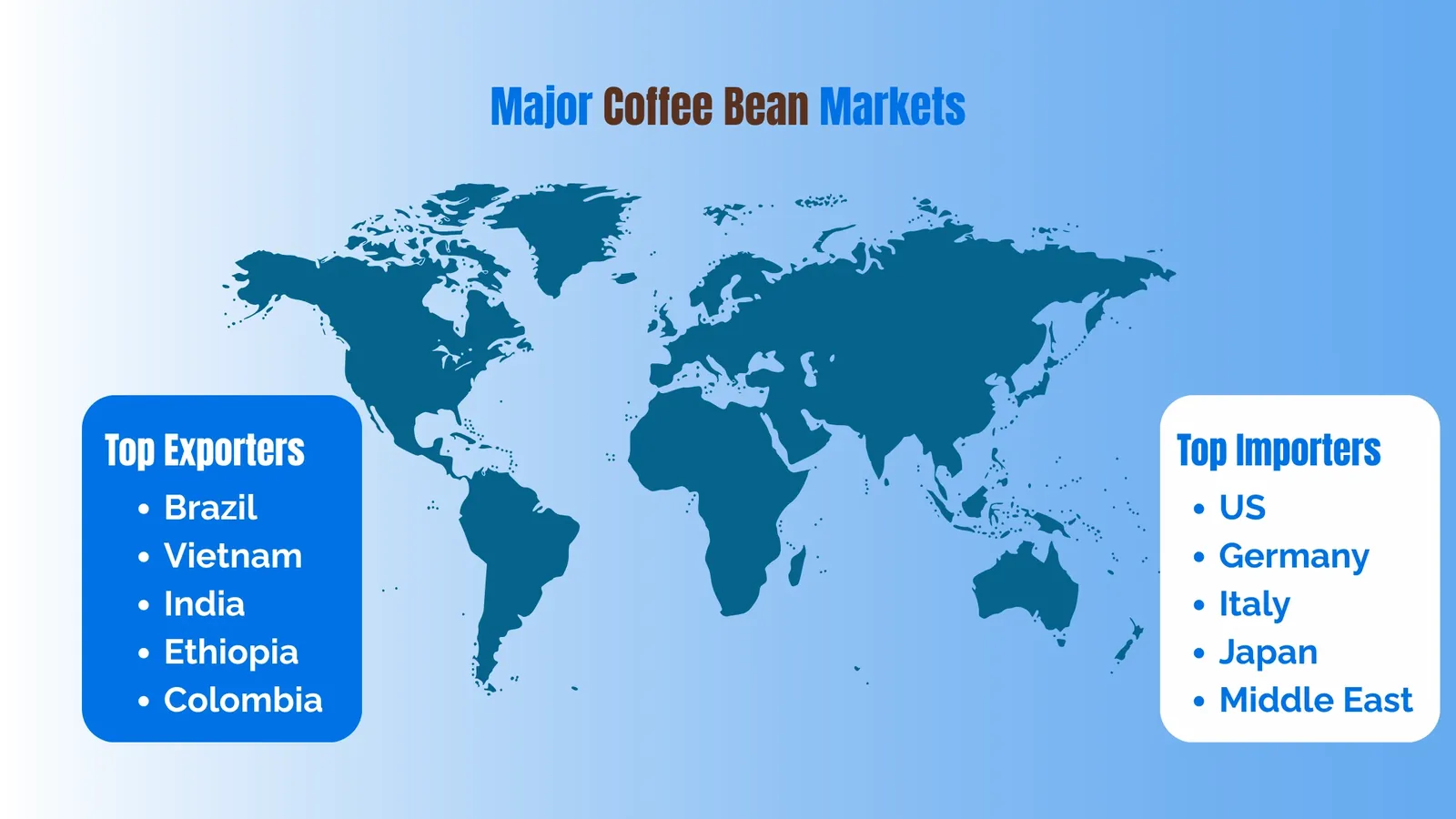
Top importers:
| ● | U.S. (biggest consumer) |
|---|---|
| ● | Germany, Italy, Japan (café culture heavyweights) |
| ● | Middle East (growing fast) |
India? A trusted supplier for Robusta and specialty Arabica worldwide.
The Challenges Nobody Talks About
Coffee trade isn’t smooth sailing. Exporters face:
| ● | Price volatility (global supply swings) |
|---|---|
| ● | Shipping delays and logistics bottlenecks |
| ● | Quality rejections (storage/moisture issues) |
| ● | Red tape across different markets |
| ● | Fierce competition from Brazil and Vietnam |
Margins depend on how well you manage these risks.
Finding Verified Coffee Suppliers
How do you avoid unreliable partners? Simple:
| ● | Work with Coffee Board-registered suppliers. |
|---|---|
| ● | Verify certifications (ISO, Organic, Fair Trade). |
| ● | Use trusted B2B directories. |
| ● | Attend trade fairs. |
| ● | Or… partner with a sourcing company. |
Working with registered suppliers is step one.
But equally important is knowing how to evaluate data and demand forecasts.
If you’re unsure where to start, our knowledge guide on Market Analysis breaks it down and explains how reports help exporters avoid costly mistakes.
And when it comes to buyers, remember that not all leads are equal. Here’s why verified Lead Generation matters in building sustainable export partnerships.
Why Work with a Sourcing Company
Sourcing companies cut through the chaos.
| ● | Verified supplier access |
|---|---|
| ● | Market intelligence |
| ● | Compliance & logistics support |
| ● | Secure trade processes |
| ● | Lead generation for new buyers |
Why TerraSourcing
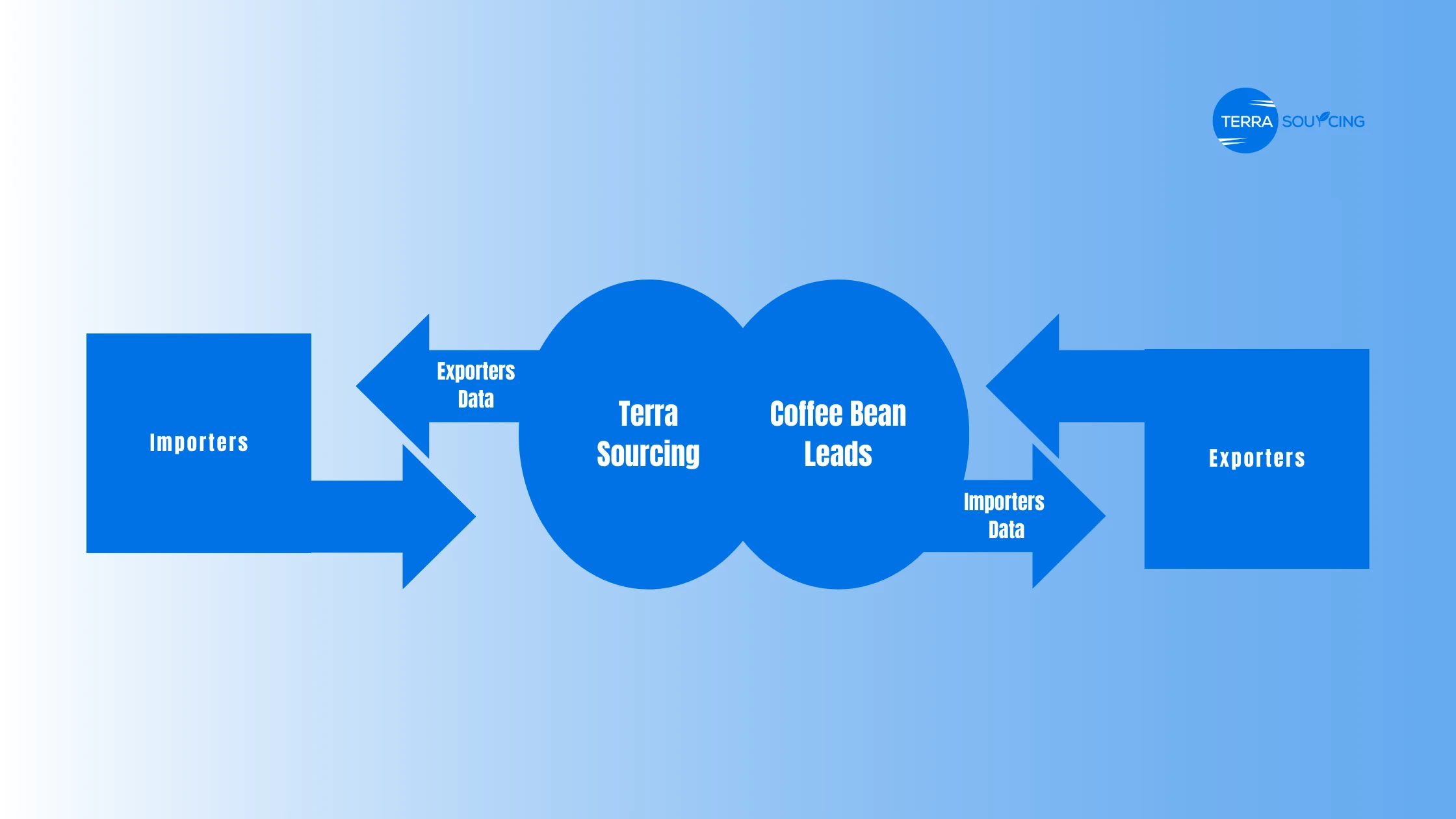
At TerraSourcing, the focus is simple: connect importers with verified Indian coffee exporters.
We make trade safer, faster, and more transparent—whether you’re sourcing Arabica, Robusta, or specialty lots. Think of us as the bridge between planters and buyers, eliminating guesswork and ensuring compliance.